Today, there are different kinds of valves with varying features
The 3 principal sorts of valves, for modern, business, or private applications being used today, are the ball valves, the door valves, and the globe valves.
Ball Valves
Ball valves can function admirably regardless of whether they are not moved for quite a long time. They additionally have a more drawn-out life. It comprises tempered steel, metal, or chrome circle that is penetrated through, starting with one of its ends and then onto the next. On the highest point of this ball, the circle is one switch, which just turns for a fourth of a circle. Whenever the level is moved in a manner so it gets corresponding to the line, the opening inside the circle gets opened and lines up with the liquid/water stream.
The water consequently streams unreservedly when the switch expects this position. Whenever the switch is pivoted for a quarter turn so it gets opposite to the line, then, at that point, the launch of the circle is shut, and the liquid stream inside the line gets impeded. Subsequently, they are likewise called quarter-turn valves, and the switch can be moved for controlling the progression of the line. In any case, in the event that the valve is just open somewhat, there happens lopsided tension, which can harm the PTFE seats of the valve (situated at both of its closures) and twist them.
The incomparable benefit of the quarter turns it like "2-way ball valves" is that they can be effortlessly taken care of, and opened and shut in a negligible part of the time. As there are chances of a "water hammer" the valves should be pivoted progressively and gradually. Indeed, even a look can figure out if the valve is open or shut.
Entryway Valves
The entryway valves, as the name proposes, are worked through a door. The entryway goes all over, along these lines forestalling or accommodating the progression of liquids. Whenever the door is in its last position, then, at that point, the progression of water or liquid gets obstructed, as well as the other way around. Door valves can have the "ascent" stems, and through the stem's situation, you can conclude whether it is shut or open. In any case, they require more moment investigation to pass judgment on the water stream, in contrast with the ball valves.
Other door valves might not have a rising stem. Consumption might influence the door valves and thwart their smooth opening and conclusion. However, as they can be opened and shut gradually, they accommodate the anticipation of a water hammer. They should be utilized in completely open or completely shut conditions. Whenever it is opened to some degree, then there would be vibrations making harm the body of the valve.
Globe Valves
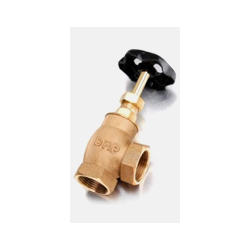
Globe valves are just planned in a manner so they can restrict the liquid or water stream. They have a haggle stem which looks like the stem of the door valves. The plug is joined to the stem, and the plan accommodates stopping the puzzle. The perplex comprises 2 half-dividers, which have a plan that accommodates a "Z" sort of water stream design.
The globe valves don't cause a "water sled" and close rather leisurely. A globe valve lessens the tension of the liquid coursing through it, as in any event, when it is completely open, the confusion doesn't accommodate the free progression of liquid. As the tension is less, the seat and the plug don't experience the ill effects of harm. These can't be utilized for the water radiators and for primary shut-off, as these applications should have valves that can be completely opened or shut. For these applications, the 2-way ball valves fit more.
For more info:-


Comments
Post a Comment